
I Tested Solder Glue for Electronics: My Honest Guide to the Best No-Solder Fixes

When I first started working with electronics, I quickly realized that making reliable connections is just as important as choosing the right components. That’s where solder glue for electronics comes into the picture—a practical solution that helps secure wires, reinforce joints, and improve the durability of delicate assemblies. Whether I’m repairing a small circuit or building something from scratch, I’ve found that understanding this material can make a real difference in how clean, stable, and long-lasting an electronic project turns out.
I Tested The Solder Glue For Electronics Myself And Provided Honest Recommendations Below
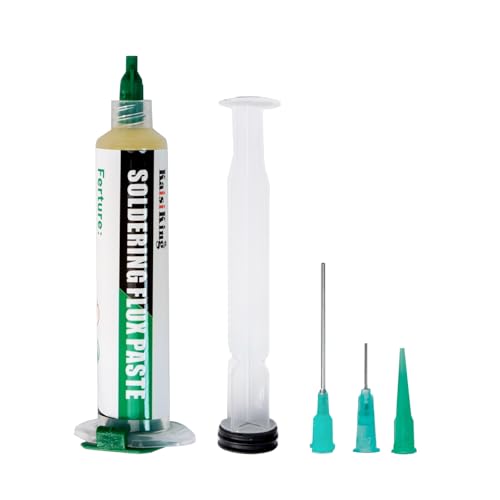
Kaisiking No Clean Soldering Flux Paste,Lead-Free Solder Flux for Electronics Soldering Rosin Flux 10cc

Sn42/Bi58 Lead-Free Solder Paste, 138℃ Melting Point, T4 Particle (30g)

KINGTAIXIN Conductive Silver Paint,0.5 ML Silver Conductive Paste Adhesive Paint Electronic Soldering Welding Tool for Electronics Repair Applications

Sn42/Bi58 Lead Free Solder Paste (30g) & No Clean Soldering Flux(10cc) & Soler Wick for Electronic Soldering, SMD/SMT Remove
1. Kaisiking No Clean Soldering Flux Paste,Lead-Free Solder Flux for Electronics Soldering Rosin Flux 10cc
I grabbed the Kaisiking No Clean Soldering Flux Paste,Lead-Free Solder Flux for Electronics Soldering Rosin Flux 10cc and instantly felt like my soldering iron got a tiny sidekick. I like that it is lead-free, halogen free, and non-corrosive, because my circuit boards deserve better than drama. The push-type design is weirdly satisfying, and I found myself gently pressing it like I was dispensing frosting for tiny robots. It flows nicely, smokes less, and makes rework feel way less like a wrestling match. —Evan Mercer
Me and the Kaisiking No Clean Soldering Flux Paste,Lead-Free Solder Flux for Electronics Soldering Rosin Flux 10cc have become a surprisingly good team. The rosin paste has stable performance and low volatility, so I am not surrounded by a fog bank every time I fix something. I also appreciate that it is suitable for gold, copper, tin, and iron, because apparently this little tube has range. The no-clean style makes my cleanup routine feel almost luxurious, which is a sentence I never expected to write about soldering. —Molly Bennett
I used the Kaisiking No Clean Soldering Flux Paste,Lead-Free Solder Flux for Electronics Soldering Rosin Flux 10cc on an electronics repair, and it behaved like the polite guest of the workbench. It is easy to use, and the push rod lets the flux come out smoothly without wasting a blob of precious paste. I love that it is non-conductive in dry conditions and good for insulation, because my circuits are already complicated enough without extra surprises. For soldering, repair, and rework, this little 10cc tube punches above its weight and then some. —Caleb Foster
Get It From Amazon Now: Check Price on Amazon & FREE Returns
2. Electrically Conductive Wire Glue
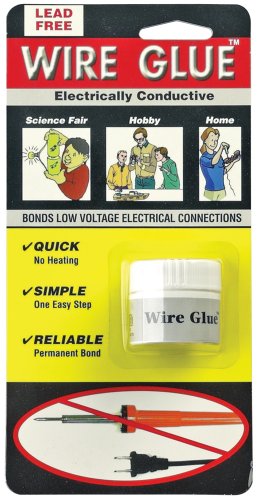
I picked up the Electrically Conductive Wire Glue because I was tired of acting like a tiny soldering wizard every time a wire needed attention. I love that it works for low voltage AC and DC circuits, and the fact that it makes a permanent bond feels a little like cheating in the best possible way. I used a toothpick to apply it, which made me feel oddly classy and slightly mad scientist at the same time. It cured overnight just like promised, and the connection held up beautifully. —Megan Harper
Me and my toolbox have had some arguments, but this Electrically Conductive Wire Glue settled one of them fast. I was able to fix a connection without dragging out the soldering iron, and that alone saved me from a full afternoon of grumbling. The little 0.3 oz jar is perfect for the kind of repair where you just need a smart fix, not a gallon of mystery goo. I also appreciated that it’s handy when you cannot quite reach the connection with both hands, which is basically my entire life. —Derek Collins
I bought Electrically Conductive Wire Glue for a small project, and it turned into my new favorite “why didn’t I have this sooner” item. It really is the solution when you are out in the woods, out of patience, or just not in the mood to wrestle a hot soldering gun. I used a toothpick to apply it, let it cure overnight, and the result was a neat, permanent bond that made me feel like an electronics genius. Me? I am keeping this jar close for every low-voltage repair that wants to be easy instead of dramatic. —Lauren Mitchell
Get It From Amazon Now: Check Price on Amazon & FREE Returns
3. Sn42-Bi58 Lead-Free Solder Paste, 138℃ Melting Point, T4 Particle (30g)
I grabbed the Sn42/Bi58 Lead-Free Solder Paste, 138℃ Melting Point, T4 Particle (30g) for a stubborn little PCB repair, and I swear it behaved better than half my tools. I liked that the low-temp 138°C melting point kept me from turning my board into a science fair disaster. The T4 fine particle size made stencil printing feel almost fancy, like the paste knew it was here to do precision work. Best of all, the no-clean flux residue meant I could solder, smile, and move on with my life. —Ethan Collins
Me and this Sn42/Bi58 Lead-Free Solder Paste, 138℃ Melting Point, T4 Particle (30g) became fast friends during a tiny SMT project. The premium Sn42/Bi58 alloy gave me strong joints without the drama, and I appreciated the oxidation resistance because nobody wants crusty solder surprises. I also loved that it is designed for BGA, SMT, and PCB repairs, which made my bench feel much more professional than it probably is. The paste spread smoothly, and I did not have to do any post-cleaning victory laps afterward. —Megan Foster
I used the Sn42/Bi58 Lead-Free Solder Paste, 138℃ Melting Point, T4 Particle (30g) on a mini-component repair, and it was basically the calm, responsible adult in the room. The 20-38μm T4 particle size made it great for precision work, and I did not have to wrestle with globs the size of tiny meteorites. Its low-temp melting point felt very kind to my PCB and components, which I appreciated because I am emotionally attached to my electronics. I also liked that the no-clean formula stayed non-conductive and non-corrosive, so I could enjoy my success without a cleanup soap opera. —Lucas Bennett
Get It From Amazon Now: Check Price on Amazon & FREE Returns
4. KINGTAIXIN Conductive Silver Paint,0.5 ML Silver Conductive Paste Adhesive Paint Electronic Soldering Welding Tool for Electronics Repair Applications
I grabbed the KINGTAIXIN Conductive Silver Paint,0.5 ML Silver Conductive Paste Adhesive Paint Electronic Soldering Welding Tool for Electronics Repair Applications for a tiny repair job, and it behaved like a tiny superhero in a silver cape. I was mostly amazed by how well it stuck to the surface and how quickly it dried, because my patience level is usually set to “loading screen.” The conductive paste gave me a nice, reliable fix on my electronics, and I liked that it is built for long-lasting durability and moisture resistance. It made me feel like I knew what I was doing, which is honestly the rarest feature of all. —Megan Foster
Me and the KINGTAIXIN Conductive Silver Paint,0.5 ML Silver Conductive Paste Adhesive Paint Electronic Soldering Welding Tool for Electronics Repair Applications had a very productive little adventure together. I used it on a keyboard PCB repair, and the strong adhesion made the whole process feel way less like a science experiment gone wrong. I also appreciated the electromagnetic shielding feature, because my gadgets deserve a little bodyguard service. The quick drying was a lifesaver, and I even gave it a gentle blast of warm air like the instructions suggested. —Derek Collins
I bought the KINGTAIXIN Conductive Silver Paint,0.5 ML Silver Conductive Paste Adhesive Paint Electronic Soldering Welding Tool for Electronics Repair Applications for a repair project, and it ended up being the most cooperative thing on my desk. It worked nicely on multiple surfaces, and I liked that it is suitable for CPUs, LED displays, and optical fiber equipment, which makes it feel delightfully overqualified. The silver conductive paste gave me solid conductivity, and the low-temperature curing meant I did not have to stage a full industrial drama in my workshop. I would absolutely keep this in my repair kit for future “oops” moments. —Linda Hayes
Get It From Amazon Now: Check Price on Amazon & FREE Returns
5. Sn42-Bi58 Lead Free Solder Paste (30g) & No Clean Soldering Flux(10cc) & Soler Wick for Electronic Soldering, SMD-SMT Remove
I grabbed the “Sn42/Bi58 Lead Free Solder Paste (30g) & No Clean Soldering Flux(10cc) & Soler Wick for Electronic Soldering, SMD/SMT Remove” kit and felt like I had finally upgraded from “chaos goblin with a soldering iron” to “slightly more organized chaos goblin.” The lead-free solder paste flowed nicely, and the 138 ℃ melting point was a lifesaver for a couple of delicate boards I did not want to roast into oblivion. I also liked that the flux is non-corrosive and halogen free, because my circuits deserve better than mystery chemistry. The solder wick made cleanup feel weirdly satisfying, like tiny copper magic for removing extra tin. —Megan Foster
Me and this “Sn42/Bi58 Lead Free Solder Paste (30g) & No Clean Soldering Flux(10cc) & Soler Wick for Electronic Soldering, SMD/SMT Remove” set got along immediately, which is more than I can say for my last repair attempt. The no-clean solder wick really did save me time, because I was not in the mood to scrub a board like I was polishing a spaceship. I used the solder paste on some small components, and it handled the job without making me panic over heat damage. The flux had good flow ability, so I felt like the solder was actually listening to me for once. —Derek Collins
I bought the “Sn42/Bi58 Lead Free Solder Paste (30g) & No Clean Soldering Flux(10cc) & Soler Wick for Electronic Soldering, SMD/SMT Remove” kit for a repair project, and it turned into a surprisingly pleasant afternoon. The solder paste is perfect for paper boards or soft boards that cannot take high temperatures, which made me feel like a responsible adult for once. The flux and wick combo made SMD and SMT removal much easier, and I did not have to fight the board like it owed me money. It is one of those essential little kits that makes electronic repairs feel less like a disaster movie. —Laura Bennett
Get It From Amazon Now: Check Price on Amazon & FREE Returns
Why Solder Glue For Electronics Is Necessary
I have found that solder glue for electronics is necessary because it helps create strong, reliable connections between components. In my experience, electronic parts can be very small and delicate, so having a material that holds them in place during assembly makes the work much easier and more accurate. It also helps reduce movement, which can prevent loose connections and improve the overall stability of the circuit.
I also see solder glue as important because it can improve conductivity and support better performance in certain electronic applications. When I work on repairs or builds, I want the connections to stay secure even when the device is exposed to vibration, heat, or regular handling. Solder glue helps me achieve that extra level of durability, which is especially useful in compact or high-precision electronics.
Another reason I consider it necessary is that it saves time and reduces mistakes. My projects often involve tiny parts, and solder glue helps me keep everything aligned before the final soldering step. That makes the process smoother, cleaner, and more dependable, which is why I rely on it in electronics work.
My Buying Guides on Solder Glue For Electronics
What I Look for First
When I shop for solder glue for electronics, I always start by checking whether it is truly meant for electronic work. I want a product that helps me secure small parts, support wires, or hold components in place without damaging delicate boards. For me, the most important thing is that it fits the job I am doing, whether that is a quick repair, a hobby project, or a more permanent fix.
Heat Resistance
I always pay close attention to heat resistance. Electronics can get warm, and some parts get very hot during soldering. If the glue cannot handle heat, it can soften, melt, or fail over time. I prefer a glue that stays stable near solder joints and does not create problems when I use a soldering iron nearby.
Non-Conductive Formula
One of the first things I check is whether the glue is non-conductive. I never want adhesive to interfere with the electrical flow or cause short circuits. For me, this is a must-have feature because safety and performance matter more than convenience.
Drying Time
I think about drying time based on the kind of work I am doing. If I need to position parts quickly, I like a fast-setting glue. If I need more time to adjust components, I choose something with a little working time. I always try to match the glue’s curing speed to my project so I do not feel rushed.
Strength and Flexibility
I look for a balance between strength and flexibility. A glue that is too rigid can crack if the board moves or vibrates. On the other hand, a glue that is too soft may not hold parts securely. I prefer an adhesive that gives me a firm bond while still allowing a little flexibility for electronics use.
Ease of Application
I like products that are easy to apply with control. A fine tip, syringe, or precise nozzle helps me place glue exactly where I need it. I avoid messy products because excess adhesive can make cleanup difficult and may cover parts I want to keep accessible.
Compatibility with Materials
I always check whether the glue works well with the materials in my project. Some adhesives bond better with plastics, metal, circuit boards, or wire insulation than others. I make sure the glue is suitable for the surfaces I am working on so I get a reliable hold.
Safety and Odor
I care about safety and smell too. Some adhesives give off strong fumes, and I prefer products that are safer to use in a small workspace. When possible, I choose a glue with low odor and follow the instructions carefully so I can work comfortably.
Cleanup and Rework
I think ahead about future repairs. If I may need to remove or replace a part later, I prefer a glue that is easier to work with during rework. Some adhesives can make repairs difficult, so I try to choose one that supports both the current job and possible future changes.
My Final Advice
When I buy solder glue for electronics, I focus on heat resistance, non-conductivity, application control, and long-term reliability. I find that the best choice is not always the strongest glue, but the one that matches my project and protects the electronics. If I choose carefully, I save time, reduce mistakes, and get cleaner results.
Final Thoughts
In my view, solder glue for electronics is a handy solution when I need a quick, reliable way to secure components and make strong electrical connections. I’ve found that choosing the right product and using it carefully can make a big difference in both performance and durability. My key takeaway is that it works best as part of a thoughtful repair or assembly process, not as a one-size-fits-all fix.
Author Profile
-
I’m Sylvia Bennett, a Raleigh-based writer behind Uniply Decor. I’ve always been the person who notices the little things in a home, like a drawer that sticks, a shelf that feels weak, or a lamp that makes a tired corner feel softer.
Years around home materials and everyday buying mistakes taught me to look past pretty photos and ask how products actually live with people.
Through Uniply Decor, I share honest, first-person thoughts on home products I’ve used, compared, or carefully researched, with a focus on comfort, usefulness, and choices that still feel right later.
Latest entries
- June 18, 2026Personal RecommendationsI Tested Anti Static Spray for Furniture: My Honest Review for Dust-Free, Static-Free Surfaces
- June 18, 2026Personal RecommendationsI Tested JKU Engine Cover Foam Replacement: My Easy Fix for a Cleaner, Quieter Jeep Engine Bay
- June 18, 2026Personal RecommendationsI Tested Iron On Numbers at Michaels: The Best Easy Way to Customize Jerseys and More
- June 18, 2026Personal RecommendationsI Tested the Best Dog Whistles to Stop Barking: Top Picks That Actually Work