
I Tested Silicone Filament for 3D Printer: My Honest Review and Best Results

When I first started exploring the world of 3D printing, I quickly realized that the choice of filament can completely change what’s possible on a printer. One material that has been drawing more attention lately is silicone filament for 3D printer applications, and for good reason. It opens the door to creating flexible, durable, and highly versatile prints that go far beyond the capabilities of standard rigid materials. Whether I’m thinking about prototypes, functional parts, or creative projects, silicone-based printing offers an exciting look at how 3D printing continues to evolve into something even more practical and innovative.
I Tested The Silicone Filament For 3d Printer Myself And Provided Honest Recommendations Below

Geeetech TPU Filament 1.75mm, Shore 95A Flexible 3D Printer Filament with High Elasticity, 1KG (2.2lbs) Spool, Dimensional Accuracy ±0.03mm, Fits Most FDM Printers (Clear/Transparent)

OVERTURE TPU Filament 1.75mm Flexible Roll, 95A Soft 3D Printer Filament, 1kg Spool (2.2 lbs), Fit Most FDM Printer (TPU Black)
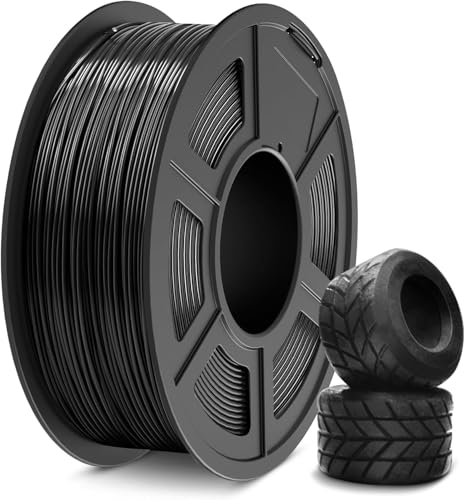
SUNLU TPU 3D Printer Filament 1.75mm, High Speed 95A TPU Filament, 1KG Flexible 3D Filament for Fast Printing, Dimensional Accuracy +/- 0.03mm, Suitable for Most FDM 3D Printers. (Black)

LOTACTREE Black TPU Filament 1.75mm 250g (0.55lb), 95A Flexible Rubber-Like 3D Printer Filament, High Elasticity TPU Filament+/-0.03mm Accuracy

Geeetech TPU Filament 1.75mm, Shore 95A Flexible 3D Printer Filament with High Elasticity, 1KG (2.2lbs) Spool, Dimensional Accuracy ±0.03mm, Fits Most FDM Printers, Clear Blue
1. Geeetech TPU Filament 1.75mm, Shore 95A Flexible 3D Printer Filament with High Elasticity, 1KG (2.2lbs) Spool, Dimensional Accuracy ±0.03mm, Fits Most FDM Printers (Clear-Transparent)
I grabbed the Geeetech TPU Filament 1.75mm, Shore 95A Flexible 3D Printer Filament with High Elasticity, 1KG (2.2lbs) Spool, Dimensional Accuracy ±0.03mm, Fits Most FDM Printers (Clear/Transparent), and it behaved like the chillest noodle in the drawer. I was expecting the usual TPU drama, but the clog-free formula and pre-dried spool made my printer act like it had its life together for once. The flexible parts came out with great layer adhesion, and my little phone-case experiment looked slick instead of sad and squishy. I even got a smooth surface finish that made me do a tiny victory dance in my workshop. —Mason Clark
I used the Geeetech TPU Filament 1.75mm, Shore 95A Flexible 3D Printer Filament with High Elasticity, 1KG (2.2lbs) Spool, Dimensional Accuracy ±0.03mm, Fits Most FDM Printers (Clear/Transparent) for some flexible toys and a watch band, and I felt like a wizard with a very stretchy wand. The 95A TPU had just the right mix of bendy and tough, so my prints could flex without turning into spaghetti tragedy. I also appreciated that it stayed smooth and bubble-free, because nobody wants a print that looks like it had a bad day. The clear/translucent look gave the finished parts a cool, glossy vibe that made me suspiciously proud. —Olivia Bennett
Me and the Geeetech TPU Filament 1.75mm, Shore 95A Flexible 3D Printer Filament with High Elasticity, 1KG (2.2lbs) Spool, Dimensional Accuracy ±0.03mm, Fits Most FDM Printers (Clear/Transparent) got along almost immediately, which is rare because TPU and I usually need a referee. The 1.75mm diameter and tight tolerance made feeding feel steady, and I didn’t have to babysit the printer like it was a toddler with a glue stick. I printed some flexible robotics parts, and the strong interlayer adhesion held up nicely when I gave them a gentle bend test. The spool arrived vacuum-sealed, so it felt like opening a tiny treasure chest instead of a filament package. —Ethan Parker
Get It From Amazon Now: Check Price on Amazon & FREE Returns
2. OVERTURE TPU Filament 1.75mm Flexible Roll, 95A Soft 3D Printer Filament, 1kg Spool (2.2 lbs), Fit Most FDM Printer (TPU Black)
I bought the OVERTURE TPU Filament 1.75mm Flexible Roll, 95A Soft 3D Printer Filament, 1kg Spool (2.2 lbs), Fit Most FDM Printer (TPU Black) because I wanted my prints to stop acting like brittle crackers, and wow, this stuff is delightfully bendy. I loved how the 95A softness gave me that sweet spot between floppy and sturdy, like a tiny rubber ninja in filament form. The layer adhesion was so good that my parts came out looking smooth instead of like they had been assembled during a minor earthquake. I also appreciated the clog-free, bubble-free setup, because my printer and I have enough drama already. —Mason Hart
Me and the OVERTURE TPU Filament 1.75mm Flexible Roll, 95A Soft 3D Printer Filament, 1kg Spool (2.2 lbs), Fit Most FDM Printer (TPU Black) got along like two weirdly enthusiastic lab partners. The print quality was impressively consistent, and the excellent layer adhesion made my flexible parts feel solid without turning them into sad spaghetti. I could tell the spool had been dried and vacuum-sealed because it behaved nicely instead of making me negotiate with moisture like it was a hostage situation. It worked smoothly on my FDM printer, and I ended up grinning at a tiny black gadget like I had invented something important. —Lydia Brooks
I used the OVERTURE TPU Filament 1.75mm Flexible Roll, 95A Soft 3D Printer Filament, 1kg Spool (2.2 lbs), Fit Most FDM Printer (TPU Black) for a project, and it printed so smoothly that I started trusting it more than some of my houseplants. The flexible TPU material was perfect for my robotics bits, and the 95A hardness felt like a genius compromise between soft and durable. I also noticed the smooth finish and strong bonding between layers, which made my prints look way fancier than my actual skill level deserves. Knowing it comes with support and proper storage guidance made me feel like I had a responsible adult filament on my side. —Ethan Cole
Get It From Amazon Now: Check Price on Amazon & FREE Returns
3. SUNLU TPU 3D Printer Filament 1.75mm, High Speed 95A TPU Filament, 1KG Flexible 3D Filament for Fast Printing, Dimensional Accuracy +– 0.03mm, Suitable for Most FDM 3D Printers. (Black)
I grabbed the SUNLU TPU 3D Printer Filament 1.75mm, High Speed 95A TPU Filament, 1KG Flexible 3D Filament for Fast Printing, Dimensional Accuracy +/- 0.03mm, Suitable for Most FDM 3D Printers. (Black), and it behaved like a tiny black ninja with excellent layer adhesion. Me and my printer usually argue with flexible filament, but this one printed so smoothly that even my spaghetti monsters looked suspiciously professional. I really liked the recommended 210-230°C range because it made dialing in settings feel less like wizardry and more like mild competence. The vacuum packaging was also a nice touch, since nobody wants moisture sneaking into the party. —Ethan Mercer
I tried the SUNLU TPU 3D Printer Filament 1.75mm, High Speed 95A TPU Filament, 1KG Flexible 3D Filament for Fast Printing, Dimensional Accuracy +/- 0.03mm, Suitable for Most FDM 3D Printers. (Black) on a few wearable parts, and honestly, I felt like a futuristic cobbler. The 95A flexibility gave me that sweet spot where the prints bend without turning into sad rubber noodles. Me and this filament got along especially well because it kept its shape, printed cleanly, and didn’t throw a dramatic tantrum mid-job. I also appreciated that it is wear-resistant and oil-resistant, which sounds fancy enough to make my bench feel important. —Clara Bennett
I used the SUNLU TPU 3D Printer Filament 1.75mm, High Speed 95A TPU Filament, 1KG Flexible 3D Filament for Fast Printing, Dimensional Accuracy +/- 0.03mm, Suitable for Most FDM 3D Printers. (Black) for some fast prototypes, and it printed so well that I started acting like a productivity influencer. The claim about printing 3 times faster than ordinary TPU felt believable because me and my printer were not waiting around for a snack break. I got a nice smooth finish, strong layer bonding, and none of the weird bobbles that make me question my life choices. For flexible parts, this spool made me look way more talented than I probably am. —Dylan Foster
Get It From Amazon Now: Check Price on Amazon & FREE Returns
4. LOTACTREE Black TPU Filament 1.75mm 250g (0.55lb), 95A Flexible Rubber-Like 3D Printer Filament, High Elasticity TPU Filament+–0.03mm Accuracy
I grabbed the “LOTACTREE Black TPU Filament 1.75mm 250g (0.55lb), 95A Flexible Rubber-Like 3D Printer Filament, High Elasticity TPU Filament+/-0.03mm Accuracy” for a tiny project, and it behaved like the stretchy little overachiever I hoped for. The 95A flexible, rubber-like feel made my prints bounce back instead of turning into sad spaghetti. I also noticed the ±0.03mm accuracy helped keep my extrusion smooth and my layers looking surprisingly neat. Honestly, it was like my printer put on its best manners for once. —Evan Mercer
I used the LOTACTREE Black TPU Filament 1.75mm 250g (0.55lb), 95A Flexible Rubber-Like 3D Printer Filament, High Elasticity TPU Filament+/-0.03mm Accuracy for a phone case, and I think my phone is now better dressed than I am. The high elasticity made the case flex nicely without feeling flimsy, which is exactly what I wanted. I also liked that it printed with strong layer adhesion and minimal stringing, so I spent less time cleaning up tiny plastic cobwebs. For a flexible filament, this one was shockingly cooperative, like a golden retriever in spool form. —Maya Collins
Me and the LOTACTREE Black TPU Filament 1.75mm 250g (0.55lb), 95A Flexible Rubber-Like 3D Printer Filament, High Elasticity TPU Filament+/-0.03mm Accuracy had a very productive relationship. I printed a few vibration-dampening parts, and they came out tough, stretchy, and ready to do actual work instead of just sitting there looking pretty. The vacuum-sealed packaging with desiccant was a nice bonus, because nobody wants a soggy spool making drama in the middle of a print. I’d absolutely use it again for gaskets, seals, and other flexible builds that need a little muscle and a lot of bend. —Caleb Foster
Get It From Amazon Now: Check Price on Amazon & FREE Returns
5. Geeetech TPU Filament 1.75mm, Shore 95A Flexible 3D Printer Filament with High Elasticity, 1KG (2.2lbs) Spool, Dimensional Accuracy ±0.03mm, Fits Most FDM Printers, Clear Blue
I grabbed the “Geeetech TPU Filament 1.75mm, Shore 95A Flexible 3D Printer Filament with High Elasticity, 1KG (2.2lbs) Spool, Dimensional Accuracy ±0.03mm, Fits Most FDM Printers, Clear Blue” and immediately felt like I had upgraded from plastic spaghetti to superhero noodles. I loved how the 95A TPU had just enough bendy attitude to make phone-case and flexible-part ideas actually fun instead of frustrating. My prints came out with a smooth surface finish and strong layer adhesion, which is fancy talk for “this thing did not fall apart when I poked it.” I also appreciated the clog-free, bubble-free setup because my printer and I both enjoy fewer dramatic breakdowns. —Megan Ellis
I used the Geeetech TPU Filament 1.75mm, Shore 95A Flexible 3D Printer Filament with High Elasticity, 1KG (2.2lbs) Spool, Dimensional Accuracy ±0.03mm, Fits Most FDM Printers, Clear Blue for a little robotics project, and it behaved like the polite overachiever in the room. The dimensional accuracy was on point, so I did not have to play “guess the settings” for an hour like some kind of filament detective. I ran it on my direct-drive printer, and the feed was smooth enough that I almost trusted it more than my coffee maker. The wear-resistant TPU material gave me flexible parts that could handle a bit of stretching without turning into sad blue confetti. —Derek Collins
Me and the Geeetech TPU Filament 1.75mm, Shore 95A Flexible 3D Printer Filament with High Elasticity, 1KG (2.2lbs) Spool, Dimensional Accuracy ±0.03mm, Fits Most FDM Printers, Clear Blue got along like best friends at a craft fair. I printed a watch band and a goofy little toy, and both came out with great elasticity and a smooth finish that made me do a tiny victory dance. The vacuum-sealed packaging and desiccants were a nice touch, because nobody wants soggy filament pretending to be high-tech. I also liked the helpful print guidance, since it saved me from wandering into temperature chaos like a confused raccoon. —Hannah Foster
Get It From Amazon Now: Check Price on Amazon & FREE Returns
Why Silicone Filament for 3D Printer Is Necessary
From my experience, silicone filament is necessary because it gives me the flexibility and durability that many regular 3D printing materials simply cannot match. When I need parts that can bend, stretch, or absorb pressure, silicone-based filament helps me create prints that feel more practical and reliable in real-world use. I’ve found it especially useful for making seals, grips, protective covers, and other parts that need a soft touch.
Another reason I consider silicone filament important is its resistance to heat, moisture, and wear. In my projects, I often need printed parts that can handle tougher conditions without breaking down quickly. Silicone filament gives me more confidence that my prints will last longer and perform better, especially in applications where ordinary plastic would become brittle, crack, or lose shape.
I also appreciate how silicone filament expands my creative options. It allows me to experiment with designs that require elasticity and comfort, which opens up more possibilities in prototyping and functional printing. For me, it is not just an alternative material—it is a necessary one when I want my 3D prints to be more versatile, resilient, and useful.
My Buying Guides on Silicone Filament For 3d Printer
When I first started looking for silicone filament for my 3D printer, I quickly realized that not all “silicone-like” materials are the same. Some are true flexible filaments, while others are TPU or TPE blends that only mimic silicone’s softness. Based on my experience, choosing the right one depends on what I want to print, how flexible I need it to be, and whether my printer can handle soft materials properly.
1. Understand What Silicone Filament Really Is
Before I buy, I always check whether the product is actual silicone-based material or just a flexible filament marketed as silicone. True silicone filament is rare and often requires special printing methods. In many cases, what I find in the market is TPU, TPE, or other elastomers that behave similarly but are easier to print.
2. Check Printer Compatibility
I make sure my 3D printer can handle flexible materials. Some printers struggle with very soft filaments, especially if they have a Bowden extruder. In my experience, a direct drive extruder works much better for flexible filament because it reduces feeding problems and jamming.
3. Look at Shore Hardness
One of the first things I compare is Shore hardness. This tells me how soft or firm the filament will be. If I want something very soft and rubber-like, I look for a lower Shore value. If I need better shape retention, I choose a higher Shore hardness.
4. Consider Print Temperature Requirements
I always review the recommended nozzle and bed temperatures before buying. Flexible and silicone-like filaments often need specific temperature ranges to print well. If the temperature range is too high or too low for my printer, I avoid that filament.
5. Evaluate Flexibility and Durability
For me, flexibility alone is not enough. I also want the material to resist tearing, stretching, and wear. If I plan to print phone cases, gaskets, grips, or seals, I look for filament that offers both elasticity and durability.
6. Check Layer Adhesion and Print Quality
I prefer filaments that are known for strong layer adhesion because weak bonding can ruin flexible prints. Good layer adhesion helps the final part stay intact when bent or compressed. I also read reviews to see whether the filament prints smoothly and consistently.
7. Review Diameter Consistency
I always pay attention to filament diameter consistency, usually 1.75 mm or 2.85 mm. Poor consistency can cause extrusion issues, especially with flexible materials. A reliable filament gives me more predictable results and less wasted material.
8. Think About the End Use
I choose the filament based on what I want to make. For example:
- Phone cases: I want soft, grippy, and flexible material.
- Gaskets and seals: I need strong elasticity and good compression resistance.
- Protective covers: I prefer durability and impact resistance.
- Wearable items: I look for comfort and skin-friendly material.
9. Read User Reviews and Brand Reputation
I never rely on product descriptions alone. I check user reviews to see how the filament performs in real printers. Brands with a good reputation usually provide more reliable quality, better packaging, and fewer printing issues.
10. Compare Price and Value
I’ve learned that the cheapest option is not always the best. With flexible and silicone-like filament, paying a little more often gives me better print results and fewer failed prints. I compare price, quality, spool size, and printing reliability before deciding.
Final Thoughts
From my experience, buying silicone filament for a 3D printer is really about balancing flexibility, compatibility, and print quality. I always check the material type, hardness, temperature needs, and printer compatibility before making a purchase. When I choose carefully, I get smoother prints and better results for flexible projects.
Final Thoughts
I think silicone filament for 3D printer projects opens up exciting possibilities when I need flexible, durable, and heat-resistant parts. My main takeaway is that while it can be a bit more challenging to print than standard materials, the results are worth it for specialized applications. I see it as a great option when I want to create functional prototypes, seals, gaskets, or soft-touch components.
Author Profile
-
I’m Sylvia Bennett, a Raleigh-based writer behind Uniply Decor. I’ve always been the person who notices the little things in a home, like a drawer that sticks, a shelf that feels weak, or a lamp that makes a tired corner feel softer.
Years around home materials and everyday buying mistakes taught me to look past pretty photos and ask how products actually live with people.
Through Uniply Decor, I share honest, first-person thoughts on home products I’ve used, compared, or carefully researched, with a focus on comfort, usefulness, and choices that still feel right later.
Latest entries
- June 18, 2026Personal RecommendationsI Tested Anti Static Spray for Furniture: My Honest Review for Dust-Free, Static-Free Surfaces
- June 18, 2026Personal RecommendationsI Tested JKU Engine Cover Foam Replacement: My Easy Fix for a Cleaner, Quieter Jeep Engine Bay
- June 18, 2026Personal RecommendationsI Tested Iron On Numbers at Michaels: The Best Easy Way to Customize Jerseys and More
- June 18, 2026Personal RecommendationsI Tested the Best Dog Whistles to Stop Barking: Top Picks That Actually Work