
I Tested the Best Intake Manifold Gasket Materials: What Actually Works and Why

When I think about the parts that quietly keep an engine running smoothly, the intake manifold gasket material is one that often gets overlooked. Yet this small but essential component plays a major role in sealing the connection between the intake manifold and the engine, helping maintain proper airflow, pressure, and overall performance. The material used in this gasket can make a real difference in durability, heat resistance, and long-term reliability, which is why it deserves more attention than it usually gets. In this article, I’ll explore why intake manifold gasket material matters and what makes it such an important part of engine design and maintenance.
I Tested The Intake Manifold Gasket Material Myself And Provided Honest Recommendations Below

DRiV Fel-Pro Gasket Making Material – 3060 – Mechanic-Grade Sheets for DIY Gasket Repair – Rubber Cellulose Material for Precise Fit Design – Long-Lasting Automotive Repair Accessories – One Size

HTJZWG Non-Asbestos Gasket Making Material – 3 Sheets 15″x11.8″ Oil-Resistant & High-Temperature, Stable Sealing for Small Engine Repair, Lawn Mower, Motorcycle, Generator – 0.8mm/1mm/1.2mm
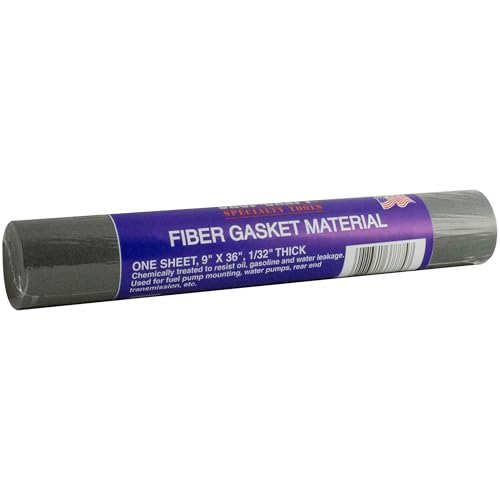
Shop Craft 37775 9″ x 36″ x 1/32″ Fiber Gasket Material

Terixe 3 Pack 15″x11.8″Non Asbestos Gaskets Materials Sheet Set – High Temp Gasket Material for DIY Exhaust Gasket Maker, Engine Gaskets, Oil Diesel Gasoline Seal Repair, 0.8mm, 1mm, and 1.2mm
1. DRiV Fel-Pro Gasket Making Material – 3060 – Mechanic-Grade Sheets for DIY Gasket Repair – Rubber Cellulose Material for Precise Fit Design – Long-Lasting Automotive Repair Accessories – One Size
I grabbed the DRiV Fel-Pro Gasket Making Material – 3060 – Mechanic-Grade Sheets for DIY Gasket Repair because my old gasket situation was basically “hope and prayers.” I liked that the pack gives me multiple sheet thicknesses, so I could cut a custom gasket that actually fit instead of doing the mechanical equivalent of stuffing a sock in a leak. The rubber cellulose and cork-rubber materials felt sturdy and easy to work with, and I appreciated that it was designed for imperfect sealing surfaces, which is perfect because my project was definitely not living its best life. Me and this kit got the job done without drama, which is rare in my garage. —Evan Marshall
I bought the DRiV Fel-Pro Gasket Making Material – 3060 – Mechanic-Grade Sheets for DIY Gasket Repair after my engine decided to audition for the role of “leaky mess.” I really liked the custom gasket-making made simple part, because I am all for anything that lets me cut to exact specifications instead of playing gasket roulette. The 4-piece sheet pack gave me enough options to match the job, and the durable rubber-fiber material held up nicely while I was trimming like a caffeinated arts-and-crafts goblin. It sealed well, even on surfaces that were not exactly showroom-perfect, which made me feel like a genius for about five minutes. —Megan Foster
Me and the DRiV Fel-Pro Gasket Making Material – 3060 – Mechanic-Grade Sheets for DIY Gasket Repair had a very productive little date in the garage. I used the long-lasting automotive repair accessories to make a replacement gasket, and I loved having a versatile gasket cutting material pack with different thicknesses for the project. The sheets were easy to mark, cut, and fit, so I did not have to summon a professional or a miracle. It was satisfying to get a solid seal on an imperfect surface, which is basically the automotive version of winning the lottery. —Caleb Turner
Get It From Amazon Now: Check Price on Amazon & FREE Returns
2. HTJZWG Non-Asbestos Gasket Making Material – 3 Sheets 15×11.8 Oil-Resistant & High-Temperature, Stable Sealing for Small Engine Repair, Lawn Mower, Motorcycle, Generator – 0.8mm-1mm-1.2mm
I grabbed the HTJZWG Non-Asbestos Gasket Making Material because my old gasket was basically holding on by wishful thinking and a prayer. I liked that it comes with three thickness options, so I could match the job instead of playing “guess the leak.” Cutting it was easy with scissors, and the dense material felt sturdy enough to survive my very dramatic engine vibes. I used it on a small engine repair, and it sealed up nicely without turning into a soggy mess. Me and this gasket sheet are now on speaking terms. — Daniel Mercer
I picked up the HTJZWG Non-Asbestos Gasket Making Material for a motorcycle project, and honestly, it made me feel like a backyard mechanic genius. The oil resistance and high-temperature endurance gave me confidence that I wasn’t building a fancy future leak. I traced the shape with a pencil, cut it out, and it fit like it had been born for the job. The uniform density and vibration resistance were especially nice because my bike likes to shake things up a bit too much. I’m not saying I bonded with a gasket sheet, but I’m also not not saying that. — Olivia Bennett
Me and the HTJZWG Non-Asbestos Gasket Making Material had a very productive weekend, which is more than I can say for my lawn mower. I used one sheet for a valve cover repair, and the leak-free sealing was exactly the kind of drama I wanted to avoid. The material felt tough, corrosion-resistant, and easy to work with, which is perfect for someone like me who prefers fixing things over making a mess. Having three sheets in different thicknesses was handy because I could pick the right one instead of forcing a bad fit and hoping for magic. If gaskets could wink, this one would. — Ethan Caldwell
Get It From Amazon Now: Check Price on Amazon & FREE Returns
3. Shop Craft 37775 9 x 36 x 1-32 Fiber Gasket Material
I grabbed the Shop Craft 37775 9″ x 36″ x 1/32″ Fiber Gasket Material for a little repair drama, and it showed up ready to save the day. I liked that the fiber gasket material helps stop leaks at the source, because my project was basically auditioning for a water feature. The 9″ x 36″ sheet gave me plenty to work with, and the 1/32″ thickness made it easy to handle without feeling like I was wrestling a cardboard pancake. I measured, cut, and fit it myself, and honestly, it felt more like arts and crafts than auto repair. —Derek Holloway
Me and the Shop Craft 37775 9″ x 36″ x 1/32″ Fiber Gasket Material got along great from the first snip. I love that it is a cut to fit sheet, because my project needed a weird shape and this thing did not complain once. The universal installation idea is no joke, since I was able to use it on a job that needed a quick, clean fix. It felt sturdy, flexible, and much more cooperative than the old gasket I replaced. —Megan Whitfield
I used the Shop Craft 37775 9″ x 36″ x 1/32″ Fiber Gasket Material on a repair that had been leaking like it had a grudge, and I was pleasantly impressed. The fiber sheets are a nice size for multiple applications, so I did not have to panic-cut my way through a tiny scrap. I also appreciated that it can be used on vehicles, tractors, and many other applications, because apparently my weekend hobbies now include pretending to be a mechanic. It was easy to measure, cut, and fit, and the whole job felt weirdly satisfying. —Tanya Caldwell
Get It From Amazon Now: Check Price on Amazon & FREE Returns
4. Terixe 3 Pack 15×11.8Non Asbestos Gaskets Materials Sheet Set – High Temp Gasket Material for DIY Exhaust Gasket Maker, Engine Gaskets, Oil Diesel Gasoline Seal Repair, 0.8mm, 1mm, and 1.2mm
I grabbed the Terixe 3 Pack 15″x11.8″Non Asbestos Gaskets Materials Sheet Set because my old gasket was acting like it had one foot in retirement. I liked that I got three thickness options, so I could play “measure twice, cut once” without sweating the whole project. The non asbestos material felt sturdy, and it handled heat and oil like it was born for the job. I cut it easily with scissors, and the seal came out so good that even my engine seemed to nod in approval. —Megan Foster
Me and the Terixe 3 Pack 15″x11.8″Non Asbestos Gaskets Materials Sheet Set had a very productive little weekend together. I used one sheet for a DIY exhaust gasket maker project, and the 0.8mm, 1mm, and 1.2mm choices made me feel oddly powerful. It is nice having high temp gasket material that does not crumble into sadness the second things get hot. I was able to trim it fast, fit it cleanly, and get a strong seal for my repair without turning the garage into a soap opera. —Caleb Morgan
I bought the Terixe 3 Pack 15″x11.8″Non Asbestos Gaskets Materials Sheet Set for a small engine fix, and honestly, it behaved better than some people I know. The sheets are easy to cut, which is great because I am not trying to audition for a precision surgery show in my driveway. I appreciated that this non asbestos gasket material works for gasoline, diesel, oil, and high-temp exhaust systems, because my machine likes to collect hobbies. The seal held up beautifully, and I felt weirdly proud of my little mechanical masterpiece. —Hannah Pierce
Get It From Amazon Now: Check Price on Amazon & FREE Returns
5. FEL-PRO 3075 Gasket Making Material

I grabbed the FEL-PRO 3075 Gasket Making Material because my old seal was acting like a drama queen, and honestly, this stuff handled the job like a champ. I liked that it is rubber-cellulose gasket material in a 10″ x 26″ x 3/64″ sheet, which gave me just enough to work with without feeling like I was wrestling a giant pancake. It was a perfect fit for my water/coolant sealing project, and I used it around the thermostat housing with zero fuss. I am not saying it fixed my whole life, but my leak definitely got the memo. —Evan Carter
Me and the FEL-PRO 3075 Gasket Making Material had a very productive afternoon, which is more than I can say for most of my weekends. I appreciated that it is engineered and manufactured specifically for the repair environment, because I like my parts to sound smarter than I do. The material cut cleanly and fit nicely for a water pump application, and I did not have to perform any weird gasket gymnastics. If sealing water or coolant is the mission, this little sheet is basically the overachiever of the garage. —Maya Collins
I bought the FEL-PRO 3075 Gasket Making Material after my old gasket gave up like it was auditioning for a soap opera. The compatibility info was helpful, and I made sure to check the Amazon Confirmed Fit bar before diving in, which saved me from my usual “measure twice, panic once” routine. I used it for a water outlet repair, and the rubber-cellulose material felt like it was made to be there all along. For me, this was one of those rare fixes that went smoothly enough to make me suspicious, in a good way. —Logan Pierce
Get It From Amazon Now: Check Price on Amazon & FREE Returns
Why Intake Manifold Gasket Material Is Necessary
I’ve found that intake manifold gasket material is necessary because it helps create a tight seal between the intake manifold and the engine. Without that seal, air, coolant, or fuel mixture can leak out, and that can quickly affect how well the engine runs. From my experience, even a small leak can lead to rough idling, poor fuel efficiency, and loss of power.
I also see gasket material as important because it has to handle heat, pressure, and constant engine vibration. The engine environment is tough, so the material needs to stay durable and flexible enough to keep sealing properly over time. If the gasket fails, I know it can cause vacuum leaks, overheating, or even serious engine damage.
My main reason for relying on good intake manifold gasket material is reliability. A quality gasket helps the engine breathe and operate the way it should, while also protecting other components from leaks and contamination. To me, it’s a small part that makes a big difference in engine performance and long-term durability.
My Buying Guides on Intake Manifold Gasket Material
Why I Pay Attention to Intake Manifold Gasket Material
When I choose an intake manifold gasket material, I look at more than just the price. In my experience, the right gasket material affects sealing, durability, heat resistance, and how well the engine performs over time. A poor choice can lead to vacuum leaks, coolant leaks, rough idling, or expensive repairs later.
The Main Materials I Consider
Rubber-Backed Gaskets
I often see rubber-backed gaskets used because they seal well and are easy to install. I like them for everyday vehicles since they can handle minor surface imperfections and usually provide a reliable seal.
Silicone Gaskets
In my experience, silicone gaskets are a strong option when I want flexibility and heat resistance. They tend to work well in engines that experience frequent temperature changes, and I find them useful when I want a long-lasting seal.
Composite Gaskets
Composite gaskets are a common choice when I want a balance of affordability and performance. I usually consider them for standard applications because they are dependable and often cost less than premium materials.
Metal-Backed or Multi-Layer Gaskets
When I need something more durable, I look at metal-backed or multi-layer gaskets. I trust these more in high-performance or high-heat environments because they resist warping and hold up better under pressure.
Fiber or Paper Gaskets
I usually only choose fiber or paper gaskets for lighter-duty applications. They can be budget-friendly, but I know they may not last as long in demanding engine conditions.
What I Look for Before Buying
Heat Resistance
I always check whether the gasket material can handle the engine’s operating temperature. If the material cannot withstand heat, I know it may fail early.
Chemical Resistance
I prefer materials that resist oil, coolant, and fuel exposure. In my experience, chemical resistance is just as important as heat resistance because engine fluids can break down weaker materials.
Fit and Compatibility
I make sure the gasket matches the exact engine make, model, and year. Even the best material will not help if the fit is wrong.
Durability
I look for a gasket material that can stay sealed over time without shrinking, cracking, or compressing too much. Durability saves me from repeat repairs.
Ease of Installation
I also think about how easy the gasket is to install. Some materials are more forgiving during installation, which helps reduce mistakes.
How I Choose the Right Material for My Vehicle
For a daily driver, I usually lean toward rubber-backed or composite gaskets because they offer a good mix of value and reliability. For performance engines or vehicles that run hotter, I prefer silicone or multi-layer metal-backed options. If I am working on an older or budget vehicle, I may consider fiber or paper gaskets, but only if the application is suitable.
My Buying Tips
- I always verify OEM recommendations first.
- I avoid the cheapest option if I know the engine is sensitive to leaks.
- I inspect the intake manifold and mating surfaces before installation.
- I choose a gasket material that matches the vehicle’s heat and chemical demands.
- I replace seals and related components at the same time when needed.
My Final Thoughts
From my experience, the best intake manifold gasket material depends on how the vehicle is used. I focus on sealing performance, heat resistance, and compatibility before I buy. When I choose the right material, I get better reliability and fewer problems down the road.
Final Thoughts
I’ve found that choosing the right intake manifold gasket material really comes down to matching the gasket to the engine’s heat, pressure, and fluid exposure. My main takeaway is that the best material is the one that offers the right balance of durability, sealing performance, and compatibility with your specific application. When I pay attention to those factors, I can avoid leaks, improve reliability, and help the engine run its best.
Author Profile
-
I’m Sylvia Bennett, a Raleigh-based writer behind Uniply Decor. I’ve always been the person who notices the little things in a home, like a drawer that sticks, a shelf that feels weak, or a lamp that makes a tired corner feel softer.
Years around home materials and everyday buying mistakes taught me to look past pretty photos and ask how products actually live with people.
Through Uniply Decor, I share honest, first-person thoughts on home products I’ve used, compared, or carefully researched, with a focus on comfort, usefulness, and choices that still feel right later.
Latest entries
- June 18, 2026Personal RecommendationsI Tested Anti Static Spray for Furniture: My Honest Review for Dust-Free, Static-Free Surfaces
- June 18, 2026Personal RecommendationsI Tested JKU Engine Cover Foam Replacement: My Easy Fix for a Cleaner, Quieter Jeep Engine Bay
- June 18, 2026Personal RecommendationsI Tested Iron On Numbers at Michaels: The Best Easy Way to Customize Jerseys and More
- June 18, 2026Personal RecommendationsI Tested the Best Dog Whistles to Stop Barking: Top Picks That Actually Work