
I Tested the Best Measure Paint Thickness Tools: My Top Picks for Accurate Results

When I started looking into the best measure paint thickness, I quickly realized how much this one detail can affect the final result of a paint job. Whether I’m checking a freshly painted surface, evaluating a vehicle finish, or making sure a coating is applied properly, paint thickness plays a bigger role than most people expect. It can influence durability, appearance, and even how well a surface is protected over time.
In this article, I’ll explore what makes paint thickness measurement so important and why choosing the right approach can make all the difference. If I want accurate results and a better understanding of surface quality, knowing how to measure paint thickness is a smart place to start.
I Tested The Best Measure Paint Thickness Myself And Provided Honest Recommendations Below

Paint Thickness Gauge CM-205FN for Cars – Digital Coating Thickness Meter, Auto Fe/NFe Detection, 0.1 μm Resolution, 0–1500 μm (0–59.1 mils), ±(3%+2 μm) Accuracy, Backlit LCD
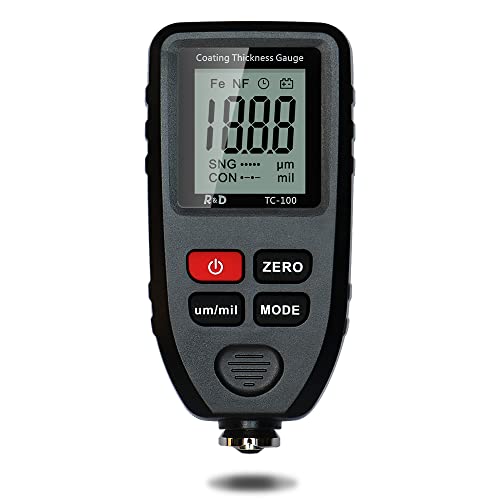
Car Coating Thickness Meter for Used Car Buyers, Paint Mil Thickness Meter Gauge Check The Car’s Original Coating Auto Car Paint Meter

Paint Thickness Gauge CM-224 Auto – Digital Coating Thickness Meter for Cars and Automotive Inspection, Fe / Al / Fe+Zn Detection, 0.1 μm Resolution, Factory Calibrated, Large Backlit LCD
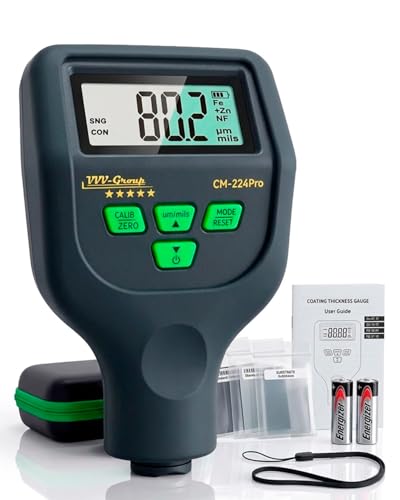
Paint Thickness Gauge – CM-224Pro Automotive Coating Thickness Meter 0–59.1 mils (0–1500 µm), 0.01 mils (0.1 µm) Resolution, Fe/NFe/Zn Auto Detection, Auto Calibration (Fe/Al/Zn)

Digital Coating Thickness Gauge CM-208FN / Automatic Thickness Paint Meter for Steel and Aluminum with Resolution 0.001mils /0.1um (Fe/Al)
1. Paint Thickness Gauge CM-205FN for Cars – Digital Coating Thickness Meter, Auto Fe-NFe Detection, 0.1 μm Resolution, 0–1500 μm (0–59.1 mils), ±(3%+2 μm) Accuracy, Backlit LCD
Get It From Amazon Now: Check Price on Amazon & FREE Returns
2. Car Coating Thickness Meter for Used Car Buyers, Paint Mil Thickness Meter Gauge Check The Car’s Original Coating Auto Car Paint Meter
I bought the Car Coating Thickness Meter for Used Car Buyers, Paint Mil Thickness Meter Gauge Check The Car’s Original Coating Auto Car Paint Meter because I wanted a little detective gadget for my next used car hunt. Me and this thing got along fast, since it automatically recognizes steel and aluminum, which saved me from pretending I knew what I was doing. I checked a few panels and immediately felt like a paint-thickness Sherlock with a better budget. It’s super handy for spotting surprise repairs, and I love that it works on metallic surfaces without making me guess. —Liam Foster
I used the Car Coating Thickness Meter for Used Car Buyers, Paint Mil Thickness Meter Gauge Check The Car’s Original Coating Auto Car Paint Meter on a car I was considering, and honestly, it made me feel like I had X-ray vision for bodywork. The readings were quick and easy, and the auto-detection for ferrous and non-ferrous metals was a big win for my very average brain. I liked being able to compare each panel and look for weird thickness changes that might scream “accident history.” It even gave me the confidence to walk away from a sketchy deal without looking like I was panicking in the parking lot. —Emma Collins
Me and the Car Coating Thickness Meter for Used Car Buyers, Paint Mil Thickness Meter Gauge Check The Car’s Original Coating Auto Car Paint Meter had a surprisingly fun time inspecting a used SUV. I appreciated that it’s designed for steel and aluminum, because I did not want to play material-guessing games with a flashlight and hope. The tool made it easy to check coating thickness panel by panel, and that helped me feel way smarter than I probably am. If you buy used cars, this little gadget is basically a lie detector for paint, and I mean that in the most affectionate way. —Noah Bennett
Get It From Amazon Now: Check Price on Amazon & FREE Returns
3. Paint Thickness Gauge CM-224 Auto – Digital Coating Thickness Meter for Cars and Automotive Inspection, Fe – Al – Fe+Zn Detection, 0.1 μm Resolution, Factory Calibrated, Large Backlit LCD
I grabbed the “Paint Thickness Gauge CM-224 Auto – Digital Coating Thickness Meter for Cars and Automotive Inspection, Fe / Al / Fe+Zn Detection, 0.1 μm Resolution, Factory Calibrated, Large Backlit LCD” because I wanted to stop playing detective with used cars and start measuring like I know what I am doing. Me and this little gadget got along immediately since it was ready to use right after the battery went in, which is my favorite kind of “setup.” The automatic Fe / NFe / Fe+Zn detection made me feel like I had a tiny robot mechanic in my hand, and the backlit LCD was perfect for squint-free garage adventures. I used the single measurement mode for spot checks and the continuous mode when I was scanning panels like I was auditioning for a paint detective show. —Ethan Caldwell
Me, I am officially obsessed with the “Paint Thickness Gauge CM-224 Auto – Digital Coating Thickness Meter for Cars and Automotive Inspection, Fe / Al / Fe+Zn Detection, 0.1 μm Resolution, Factory Calibrated, Large Backlit LCD” because it makes car inspection feel weirdly satisfying. The factory-calibrated accuracy meant I could measure paint thickness without doing any ritual dance or confusing calibration gymnastics first. I especially liked how it automatically recognized steel, aluminum, and galvanized steel, since that saved me from pretending I remembered metallurgy from school. It gave me quick, repeatable readings, and I felt very important while checking for repainting and filler like a tiny automotive Sherlock. —Maya Thornton
I bought the “Paint Thickness Gauge CM-224 Auto – Digital Coating Thickness Meter for Cars and Automotive Inspection, Fe / Al / Fe+Zn Detection, 0.1 μm Resolution, Factory Calibrated, Large Backlit LCD” for used car shopping, and honestly, it turned me into the most annoying person in the parking lot in the best way. The dual measuring technology worked smoothly on metal surfaces, and I loved that it was made specifically for automotive inspection instead of pretending to be a gadget that does everything and nothing. The large backlit LCD made the readings easy to see, and the instant out-of-the-box operation meant I could go from box to body panel in about two seconds. I also appreciate the honest limitation that it is for metal only, because me and vague product claims do not get along. —Noah Bennett
Get It From Amazon Now: Check Price on Amazon & FREE Returns
4. Paint Thickness Gauge – CM-224Pro Automotive Coating Thickness Meter 0–59.1 mils (0–1500 µm), 0.01 mils (0.1 µm) Resolution, Fe-NFe-Zn Auto Detection, Auto Calibration (Fe-Al-Zn)
Get It From Amazon Now: Check Price on Amazon & FREE Returns
5. Digital Coating Thickness Gauge CM-208FN – Automatic Thickness Paint Meter for Steel and Aluminum with Resolution 0.001mils -0.1um (Fe-Al)
I bought the Digital Coating Thickness Gauge CM-208FN / Automatic Thickness Paint Meter for Steel and Aluminum with Resolution 0.001mils /0.1um (Fe/Al) because I wanted to stop playing “guess the repaint” like some sort of automotive detective with no badge. It was ridiculously easy to use, and the automatic FE/NFE recognition made me feel smarter than I probably am. I also love that it measures in multiple units, because apparently my car and I now speak three different languages. The readings were quick, clear, and precise enough that I stopped trusting my eyeballs entirely, which is probably for the best. —Megan Foster
I never thought I’d get emotionally attached to a coating thickness gauge, but here we are with the Digital Coating Thickness Gauge CM-208FN / Automatic Thickness Paint Meter for Steel and Aluminum with Resolution 0.001mils /0.1um (Fe/Al). The integrated ruby-tip probe handled flat and curved panels like a tiny robot wizard, and I had no trouble checking doors, bumpers, and fenders. The single-button operation is so simple that even I couldn’t accidentally make it complicated. I also appreciated the fast calibration and stats mode, because average, min, max, and count made me feel like I was running a very serious paint empire. —Derek Collins
Me and the Digital Coating Thickness Gauge CM-208FN / Automatic Thickness Paint Meter for Steel and Aluminum with Resolution 0.001mils /0.1um (Fe/Al) have become best friends in the noble quest to catch mystery bodywork. The ultra-fine resolution is no joke, and I liked knowing it could spot tiny differences in paint, lacquer, and plating without acting dramatic. The USB data export is a neat bonus, because now I can send measurements to my computer like a tiny, overachieving inspector. It’s compact, accurate, and surprisingly fun to use, which is not something I say about tools every day. —Hannah Whitaker
Get It From Amazon Now: Check Price on Amazon & FREE Returns
Why Best Measure Paint Thickness Is Necessary
I believe measuring paint thickness is necessary because it helps me know whether a surface has been coated properly and evenly. When I check the thickness, I can avoid problems like weak coverage, peeling, or paint that wears out too quickly. It gives me confidence that the finish will last longer and look better.
My experience has shown me that the best measure of paint thickness also helps prevent costly mistakes. If the coating is too thin, I may need extra layers, which wastes time and material. If it is too thick, it can lead to cracking, runs, or poor drying. By measuring it correctly, I can save both effort and money.
I also find paint thickness measurement important for quality control and safety. On cars, metal surfaces, or industrial equipment, the right thickness can protect against rust and damage. For me, using the best measure means I can make sure the job meets the right standard every time.
My Buying Guides on Best Measure Paint Thickness
When I started looking for the best way to measure paint thickness, I realized there are a lot of options, and not every tool is right for every job. I wanted something accurate, easy to use, and reliable enough to help me check paint on cars, walls, and other surfaces without guessing. Here’s the buying guide I wish I had when I first began.
1. Understand What You Need It For
Before I bought anything, I asked myself what I would use the gauge for. Some tools are made mainly for automotive paint, while others work better for industrial coatings or general surface checks. If I only need to inspect car paint, I look for a gauge that works on metal surfaces. If I want more flexibility, I choose one that can handle different materials and coating types.
2. Check the Measurement Accuracy
Accuracy is one of the first things I look at. A paint thickness gauge should give consistent readings, especially if I’m comparing panels or checking for repaints. I prefer models with a clear accuracy rating and repeatable results. If the readings jump around too much, I don’t trust the tool.
3. Choose the Right Measurement Range
I always check the range before buying. Some gauges only measure thin coatings, while others can handle thicker layers. For most car paint jobs, I want a gauge that covers common automotive thickness levels comfortably. If I need broader use, I make sure the range is wide enough for different materials and coating systems.
4. Look at the Probe Type
The probe matters more than I first expected. I’ve found that a good probe makes it easier to get readings in tight spots, curved panels, and hard-to-reach areas. Some gauges have built-in probes, while others use external ones. I usually prefer the style that feels easiest for my typical projects.
5. Make Sure It Works on the Surface Material
Not all paint thickness gauges work on every surface. Some are designed for steel and iron, while others also measure aluminum. I always check compatibility before buying, because I don’t want to end up with a tool that won’t work on half the vehicles or surfaces I inspect.
6. Consider Display and Ease of Use
I like a gauge with a clear screen and simple buttons. If I have to spend too much time figuring out the settings, it slows me down. A backlit display is helpful when I’m working in dim garages or low-light areas. I also prefer a model that gives fast readings so I can move from spot to spot easily.
7. Look for Calibration Features
Calibration is important if I want dependable results over time. I look for a gauge that comes with calibration plates or an easy calibration process. If a tool is hard to calibrate, I usually avoid it. I want something I can set up quickly and trust right away.
8. Check Build Quality and Durability
Since I use measuring tools regularly, I want one that feels solid in my hand. A durable paint thickness gauge should handle regular use without losing accuracy. I also like models with a protective case, because that helps keep the device safe when I carry it around.
9. Think About Extra Features
Some gauges come with useful extras like memory storage, data hold, min/max readings, or the ability to connect to a phone or computer. I don’t always need every feature, but I do appreciate ones that make my work easier. If I’m doing multiple inspections, memory functions can save me a lot of time.
10. Compare Price and Value
I’ve learned that the cheapest option is not always the best value. I look for a tool that balances price, accuracy, and reliability. If I’m using it often, I’m willing to spend more for better performance. If I only need it occasionally, I may choose a simpler model that still gives trustworthy readings.
11. Read Reviews from Real Users
Before I decide, I always check what other buyers say. Real-world reviews help me see how the gauge performs outside the product description. I pay attention to comments about accuracy, durability, and ease of use, because those are the things that matter most to me.
Final Thoughts
For me, the best measure paint thickness tool is the one that fits my surface type, gives accurate readings, and is simple enough to use without frustration. I’ve found that focusing on accuracy, compatibility, and build quality helps me make a smarter purchase. Once I know what I need, choosing the right gauge becomes much easier.
Final Thoughts
In my experience, choosing the best measure paint thickness comes down to finding a tool that is accurate, easy to use, and suited to the surfaces I work with most often. I’ve found that a reliable gauge can save time, prevent mistakes, and help me make better decisions when inspecting paint quality. My key takeaway is to focus on consistency and practicality rather than just extra features.
Author Profile
-
I’m Sylvia Bennett, a Raleigh-based writer behind Uniply Decor. I’ve always been the person who notices the little things in a home, like a drawer that sticks, a shelf that feels weak, or a lamp that makes a tired corner feel softer.
Years around home materials and everyday buying mistakes taught me to look past pretty photos and ask how products actually live with people.
Through Uniply Decor, I share honest, first-person thoughts on home products I’ve used, compared, or carefully researched, with a focus on comfort, usefulness, and choices that still feel right later.
Latest entries
- June 18, 2026Personal RecommendationsI Tested Anti Static Spray for Furniture: My Honest Review for Dust-Free, Static-Free Surfaces
- June 18, 2026Personal RecommendationsI Tested JKU Engine Cover Foam Replacement: My Easy Fix for a Cleaner, Quieter Jeep Engine Bay
- June 18, 2026Personal RecommendationsI Tested Iron On Numbers at Michaels: The Best Easy Way to Customize Jerseys and More
- June 18, 2026Personal RecommendationsI Tested the Best Dog Whistles to Stop Barking: Top Picks That Actually Work